Cartilage damage hardly heals on its own. If the cartilage is damaged in a limited area, it can be smoothed, stimulated to form replacement tissue or filled with the body’s own cartilage – so that the joint can bear weight for as long as possible.
Joint-preserving
Two clinics in Wertheim
German statutory insurance at the Bürgerspital
5,888 reviews on ProvenExpert
1–2procedures, depending on the method
up to 6weeks on crutches, often with partial weight-bearing
3–6months until low-impact sport
6–12months until sport involving jumping
Guide values that depend heavily on the method. The first consultation sets out the exact plan.
Cartilage damage
A tissue that barely heals.
Articular cartilage is a smooth, elastic layer on the ends of the bones. It absorbs shocks and lets the joint surfaces glide almost without friction. Because it has no blood vessels of its own, it hardly renews itself after damage – a defect usually remains and can grow larger over time.
Limited cartilage damage is often due to an old injury, years of overloading or a misalignment that puts more strain on one side of the joint. In young people, a piece of cartilage together with the bone beneath it can also come loose; specialists call this osteochondritis dissecans. The knee is affected most often, the ankle less often.
Typical signs are pain under load, recurrent swelling due to fluid in the joint and sometimes catching. Cartilage cannot be seen on an X-ray; the location, size and depth of the damage are shown by magnetic resonance imaging (MRI), and conclusively by arthroscopy.
Limited damage is different from osteoarthritis, in which the cartilage wears away over a large area. Cartilage therapy targets well-defined defects in an otherwise largely healthy joint: it aims to close the joint surface again, relieve symptoms and preserve the joint for as long as possible. How far this succeeds varies from person to person.
The treatment
What cartilage therapy can achieve.
Smooth
Loose cartilage fibres and tears are smoothed arthroscopically so that they no longer rub or catch.
Stimulate
In microfracture, fine openings are made in the bone beneath the damage. Cells from the bone marrow form replacement tissue there.
Replace
Larger defects can be filled with the body’s own cartilage – with small cylinders of cartilage and bone taken from an area under little load, or with cartilage cells multiplied in the laboratory.
The path
A path that takes patience.
The operation is often the shorter part of treatment. New cartilage tissue needs months before it can bear weight – and aftercare provides support for that long.
Findings
Besides the cartilage, the ligaments, menisci and the alignment of the leg are examined. They help determine which treatment will last.
Alignment and stability
If the leg is misaligned or the joint is unstable, new cartilage would be overloaded again. In that case, an alignment correction or stabilisation becomes part of the plan, sometimes in the same procedure.
Surgery
Many cartilage procedures can be done arthroscopically; larger ones require a small open approach. If cartilage cells are to be multiplied in the laboratory, a little cartilage is removed first; the cells are implanted a few weeks later.
Protection
Up to six weeks on crutches, often with partial weight-bearing, so that the new tissue can take hold. A motorised motion splint moves the joint without putting weight on it.
Building up
After that, the load is increased over months: cycling and swimming earlier, running and sports with jumps much later. Physiotherapy and follow-up appointments provide support during this time.
Statutory or private insurance
How the costs are covered.
Statutory health insurance
At the Bürgerspital, including complex procedures.
If cartilage damage explains the symptoms and the operation is medically indicated, German statutory health insurance covers the costs; the operation is performed at the Bürgerspital Wertheim. For the knee, this also includes the transplantation of the body’s own cartilage cells, which the Federal Joint Committee (G-BA) confirmed as a hospital benefit in 2022.
Private insurance or self-pay
Reimbursement within your policy.
Private health insurers and Beihilfe (the German civil service medical allowance) reimburse medically necessary cartilage procedures according to the rules of the individual policy.
Besides the Bürgerspital, patients with private insurance and self-pay patients can also choose the Main-Tauber-Klinik, a private clinic embedded in the Bürgerspital.
Specialists
Your surgeons at a glance.
In Wertheim, cartilage damage is treated by specialists in trauma surgery and orthopaedics – in the knee with a focus on joint injuries, in the ankle with a focus on foot surgery.
Dr. med. Klaus FecherSpecialist in Trauma Surgery & OrthopaedicsWertheim
Dr. med. Stephan VögeliSpecialist in Trauma Surgery & Orthopaedics / Specialist in Special Trauma SurgeryWertheim
Locations
Where treatment takes place.
Each clinic shows on its own website how the treatment works there.
Germany
Wertheim
The Bürgerspital, a hospital in the state hospital plan, and the Main-Tauber-Klinik, a private clinic, under one roof, with a team from orthopaedics, trauma surgery and physiotherapy.
No. Small defects without symptoms are often just monitored, and physiotherapy that strengthens the muscles can relieve the joint. Surgery is recommended if pain, swelling or catching persist and the images show matching damage.
Which method is the right one?
That depends mainly on the size, depth and location of the damage, as well as on age, the demands placed on the joint and the condition of the rest of the knee. Small defects are usually smoothed or treated with microfracture. From about two square centimetres in the knee, the body’s own cartilage is more likely to be transplanted; if cells are multiplied in the laboratory for this, two procedures are needed.
Why does leg alignment matter?
With bow legs or knock knees, more weight rests on one side of the knee. Cartilage damage develops more easily there, and new tissue would be overloaded again. A realignment operation that straightens the bone near the knee can distribute the load more evenly.
Am I too old for cartilage therapy?
Age alone does not decide; what matters more is how healthy the rest of the joint is. Because general wear and tear becomes more common with age, cartilage-building procedures are best suited to younger, active people.
Is the new tissue as good as the original cartilage?
Not quite. The replacement tissue after microfracture is less resilient than healthy cartilage. Transplanted cartilage comes closer to it, but takes up to a year to mature.
What are the risks of cartilage surgery?
As with any operation, infection, bleeding and thrombosis, as well as joint stiffness or persistent fluid in the joint. The new tissue may not heal in completely or may come loose later; a further procedure is then sometimes needed. Symptoms can also remain after successful treatment.
Consultation
Personal consultation.
Describe your request – the right clinic will get back to you.
CGCE Group in the media
Reviews
What patients say about us.
CGCE GroupVerified
5,888 reviews on ProvenExpert
SFSithembiso F.
This was the best decision I have ever taken for myself. The whole experience has changed my life for the better. From the first consultation I felt welcomed and treated very well. I did not feel alone during the journey because the team were just a WhatsApp away and they made regular check-ups on me. Thank you for everyone at the hospital from the staff to the doctors, you are all amazing.
Weight Doctors South Africa
MMaria
Wow, was für ein erster Eindruck! Dr. Frank Gruner, dessen Professionalität von jahrelanger Erfahrung zeugt, war äußerst verständlich und menschlich (was mir sehr wichtig war). Er verstand meine Bedürfnisse, und seine Erklärungen und Anweisungen entsprachen genau meinen Vorstellungen. Die Patientenberaterin Jennifer war mit ihrem Charme ebenfalls eine große Hilfe und erklärte mir alles Notwendige und den weiteren Ablauf. Auch die Mitarbeiter am Empfang waren sehr höflich und freundlich. Ich melde mich nach der Operation mit meinen Eindrücken zurück. Vielen Dank an alle!
Westfalenklinik Fachklinik für Plastische und Ästhetische Chirurgie · Original in German
AAnonym
Ich habe eine Unterlidstraffung machen lassen und bin mit dem Ergebnis sehr zufrieden. Mein Dank geht vor allem an Frau Dr. Simidjiiska für ihre Fürsorge, Kompetenz und Empathie. Aber auch das gesamte Team der Klinik macht einen hervorragenden Job!
Westfalenklinik Fachklinik für Plastische und Ästhetische Chirurgie · Original in German
AAnonym
Ich bin rundum begeistert von meiner Erfahrung in dieser Haartransplantationsklinik. Von der ersten Kontaktaufnahme bis zur Nachsorge war alles hervorragend organisiert und professionell. Das gesamte Team war unglaublich freundlich, hilfsbereit und zuvorkommend. Man hat sich jederzeit gut aufgehoben und ernst genommen gefühlt. Besonders positiv fand ich, dass sich alle Mitarbeiter ausreichend Zeit genommen haben, um meine Fragen zu beantworten und jeden Schritt verständlich zu erklären. Auch der Service war erstklassig. Die Organisation, die Betreuung vor und nach dem Eingriff sowie die Kommunikation waren wirklich hervorragend. Das gesamte Team hat einen sehr kompetenten und gleichzeitig menschlichen Eindruck gemacht. Die Klinik selbst ist modern, sauber und sehr gut ausgestattet. Während der Behandlung wurde äußerst sorgfältig und professionell gearbeitet, und ich hatte zu jedem Zeitpunkt das Gefühl, in guten Händen zu sein. Ein großes Dankeschön an das gesamte Team für die tolle Betreuung und den freundlichen Umgang! Ich kann die Klinik absolut weiterempfehlen und bin mit meiner bisherigen Erfahrung sehr zufrieden. Wer Wert auf Professionalität, Qualität und einen hervorragenden Service legt, ist hier meiner Meinung nach bestens aufgehoben.
Westfalenklinik Fachklinik für Plastische und Ästhetische Chirurgie · Original in German
AWAndre W.
Bisher war es nur ein Beratungsgespräch aber es war sehr gut.
Weight Doctors Group · Original in German
DCDavid C.
Ich fand, dass der Arzt gut und verständlich erklärt hat. Ich habe diese Woche noch einen Termin in einer anderen Klinik, da ich mich gründlich informieren möchte; auch der Preis wird dabei eine Rolle spielen – darüber bin ich ganz offen.
QUOLE Medisch Centrum · Original in German
MMomo
Hervorragende Behandlung. Von der ersten Beratung bis zur Nachsorge hat mir Dr. Koch stets ein sehr gutes Gefühl vermittelt. Ich litt jahrelang unter einer echten Gynäkomastie, nach der OP kann sich das Ergebnis sehen lassen, mein Selbstbewusstsein ist endlich zurückgekehrt. Ich kann die Alster Klinik jedem empfehlen, der schon lange mit dem Gedanken spielt sich operieren zu lassen.
Alster-Klinik Hamburg · Original in German
AAnonym
Dr. Schubert gab mir das Gefühl, in genau der richtigen Praxis zu sein für mein Anliegen. Ich habe mich beim Beratungsgespräch sehr wohl gefühlt und verstanden gefühlt.
Alster-Klinik Hamburg · Original in German
LSLieselotte S.
Über die ehrliche Einschätzung
Alster-Klinik Hamburg · Original in German
HGHannelore G.
Ich habe mich sehr wohl geführt, das Gespräch war sehr gut, die Ärztin hat mir sehr ausführlich alles erklärt und bin mit einem sehr guten Gefühl nach Hause gegangen.
Westfalenklinik Fachklinik für Plastische und Ästhetische Chirurgie · Original in German
CKCarmen K.
Ich bin eine sehr ängstliche Person. Bei Herrn Dr. Neis habe ich mich sofort wohlgefühlt. Behandlungsgespräche, Umgang, Freundlichkeit – es passt alles. Ich kann ihn ohne Bedenken und Einschränkung nur weiter empfehlen. Dankeschön Herr Dr. Neis für die tolle Arbeit.
CGCE Group · Original in German
MLMichaela L.
Dr. Klarner ist sehr nett, hat mich sehr gut beraten und aufgeklärt. Ich hab mich gut aufgehoben gefühlt, vielen Dank!


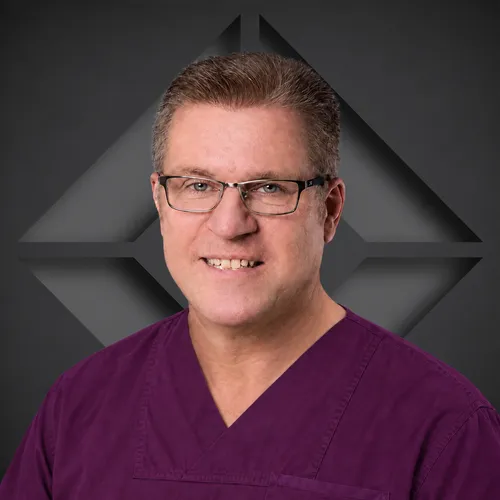 Dr. med. Klaus Fecher
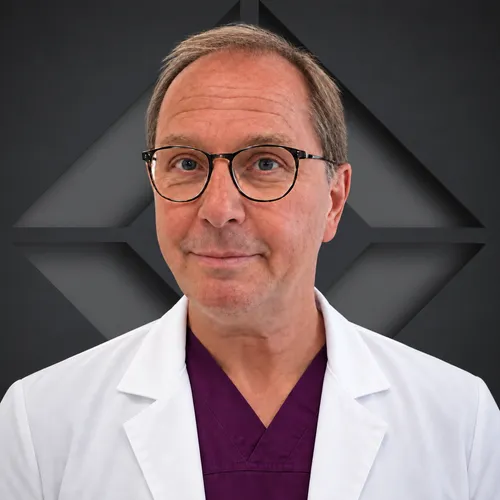 Dr. med. Stephan Vögeli